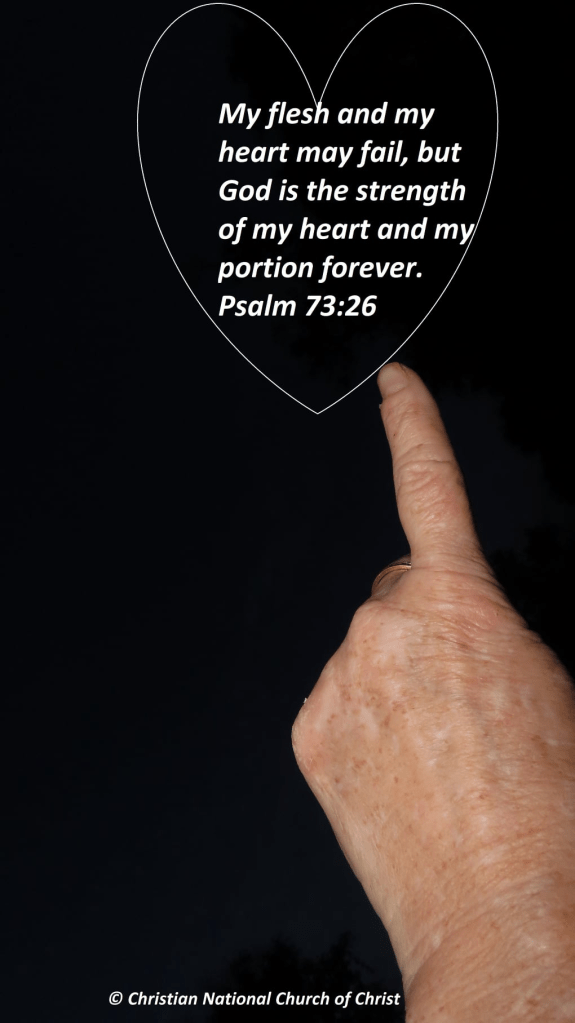
This verse serves as a profound reminder that even in moments of weakness or discouragement, God remains our steadfast source of strength and hope. It acknowledges human frailty, our flesh and heart may fail, while offering reassurance of God’s unwavering and eternal nature. Written by Asaph, who grappled with the prosperity of the wicked, this passage reflects his ultimate peace in trusting God. It emphasizes that true security lies not in worldly achievements or personal strength, but in the presence and faithfulness of God.
My flesh and my heart may fail, but God is the strength of my heart and my portion forever. Psalm 73:26
Asaph was a prominent figure in the Bible, known primarily as a Levite musician and psalmist during the reigns of King David and King Solomon. He was appointed to lead worship in the Tabernacle and later in the Temple. Asaph is credited with writing twelve Psalms (Psalms 50, 73-83), which reflect themes of worship, justice, and God’s sovereignty. Beyond his role as a musician, Asaph was also considered a seer or prophet, as mentioned in (2 Chronicles 29:30. King Hezekiah and his officials ordered the Levites to praise the Lord with the words of David and of Asaph the seer. So they sang praises with gladness and bowed down and worshiped.) His descendants, known as the “sons of Asaph,” continued his musical legacy, serving as temple singers and worship leaders.

 "Common Sense Of Miracles" "Christian National Church Of Christ"
He is ETERNAL!!
LikeLike